Achieving sales growth may be a challenge for companies. Markets shift and customer expectations change. While revenue growth is often the primary goal, actual growth depends on consistency and the ability to adapt to changing conditions. Sales growth solutions help businesses expand consistently.
Growth involves more than sales volumes. Businesses that enjoy consistent growth are usually clear about their target audience and the strategies that work. Without this clarity, sales efforts are often impulsive. This can result in unreliable revenue and missed opportunities. Many businesses fail to achieve steady sales growth because of multiple challenges, such as disconnected processes and inconsistent lead quality.
Technology and data are central to modern growth strategies. While businesses have access to more information than earlier, many struggle to use it effectively. Strategies that focus on meaningful insights help companies understand customer behaviour, forecast demand more accurately and identify patterns that support better planning.
Ultimately, sales growth is not achieved through isolated initiatives or one-time campaigns. It happens through continuous improvement. Growth solutions provide a framework for this improvement by helping businesses move from fragmented efforts to cohesive, scalable systems. As markets continue to change and customer expectations rise, businesses that take a structured and adaptable approach to sales growth will be better positioned to compete. This blog delves into these topics in detail, providing insights into how sales growth solutions can help firms achieve long-term and measurable sales success.
Key Factors That Influence the Impact of Sales Growth Solutions
The success of sales growth solutions relies on many factors that affect how well these strategies work. Many businesses invest in processes aimed at boosting revenue. However, the effectiveness of these strategies depends on how they are used.
Even well-planned growth initiatives might fail in the absence of well-defined objectives. To achieve optimal sales growth, it's essential to align solutions with specific outcomes, such as improving conversion rates or increasing customer retention. Defining your target audience is essential for successful sales growth. Businesses that lack a basic understanding of their customer base often get inconsistent results, regardless of the tools or methods they use.
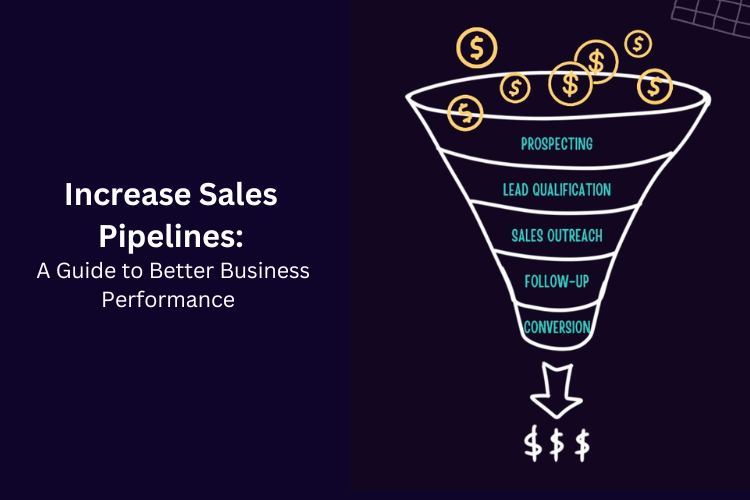
Another crucial factor is the structure and consistency of the sales process. When processes differ greatly among team members, tracking performance becomes difficult, and scalability suffers. A structured but flexible sales process produces consistent results by ensuring leads are managed effectively and opportunities are nurtured efficiently throughout the pipeline.
The way companies use and adapt technology affects how well growth tactics work. Implementing CRM systems or analytics platforms does not ensure improvement. The true benefit comes from how consistently and intelligently these tools are used. Sales growth solutions from digital marketing experts like Sales Magnitude provide better insights and more accurate forecasting.
As markets, customer behaviour and company targets change, so must growth strategies. Businesses that routinely assess performance measures and adjust their approach are better positioned to sustain positive results. Sales growth solutions that are viewed as dynamic frameworks rather than fixed tactics are more likely to maintain their effectiveness in evolving conditions.
Choosing the Right Sales Growth Solutions for Your Business
Choosing the correct sales growth solutions is a key decision that can impact both short-term revenue and long-term business stability. With so many methods and service providers available, businesses often struggle to identify which solutions truly align with their aims.
The first step in identifying suitable growth strategies is evaluating the company's present condition. This includes metrics like sales performance and conversion rates. Without a clear baseline, it's difficult to identify the level of change required or which solutions will have the greatest impact. An honest review reduces wasted investments and sets fair expectations from the start.
Defining clear and measurable goals is equally important. Unclear goals can result in inconsistent implementation, making it difficult to assess progress. Clear goals create a sense of direction, allowing businesses to decide which projects are more vital. This ensures the chosen methods are consistent with the company's business strategy.
When deciding on growth strategies, it is equally important to consider cost and ROI. The most expensive choice is not usually the most effective. At the same time, low-cost solutions may not provide the depth necessary for long-term growth. Sales growth solutions with clear performance tracking and measurable results make it easier to calculate ROI and justify long-term investment.
Compatibility with existing systems affects the chances of success. Businesses may not want to adopt growth strategies that involve major changes or disturb existing processes. Solutions that blend with existing systems tend to produce faster outcomes.
In the end, businesses should think about the level of support and flexibility provided by their chosen strategies. Solutions that allow for continuous refining and data-driven improvements are more likely to be effective over time.
Common Mistakes to Avoid When Focusing on Sales Growth Solutions
Many companies invest time and money into generating more revenue, but the results are often not what they hoped for. Focusing on sales growth solutions without a clear plan for how to implement them can result in short-term gains but long-term instability. Companies can expand their sales more strategically and avoid making choices that hurt long-term profitability by knowing about these common errors.
Treating Growth Plans as Quick Fixes
Businesses often wrongly assume sales growth measures are short-term fixes and not long-term plans. This usually leads to the adoption of strategies that promise quick results without addressing underlying issues like ineffective processes or inconsistent follow-up. Sales growth strategies are most effective when executed as part of a larger, more flexible business plan. Expecting fast results might result in frequent plan adjustments, miscommunication and difficulty identifying what actually works.
Over-Reliance on Technology Without Process Alignment
While technology is useful in modern businesses, over-reliance on tools is a common risk. Businesses often use CRM systems, automation platforms and analytics tools with the expectation that they would automatically boost results. These tools remain underutilised if they are not fully integrated into daily tasks. Sales growth solutions that focus on technology above process alignment and team training usually fail to produce effective outcomes. Technology should support strategy rather than replace it.
Focusing Solely on Lead Volume Instead of Lead Quality
Many businesses wrongly believe that sales growth is linked to generating more leads rather than the quality of leads. High lead volume can give the impression of progress, but low-quality leads strain sales teams and lower conversion rates. Sales growth solutions are more effective when they focus on targeting, segmentation and selection. Businesses that focus on lead quality enhance their efficiency and generate more predictable revenue.
Conclusion
Sales growth requires more than a single plan or short-term initiative. It occurs through consistent effort and the ability to adapt to changing market conditions. Sales growth solutions are more effective when adopted as long-term plans rather than one-time fixes. They give structure to sales activities and help firms achieve more predictable and scalable results.
Businesses that define their target audience, standardise sales processes and set reasonable goals are more likely to produce consistent outcomes. Equally crucial is leveraging data to drive decisions and constantly improve based on performance insights. Sales growth solutions that adhere to these criteria usually offer benefits that extend beyond immediate increases in revenue.
Businesses that use a systematic and flexible approach to sales growth are better positioned to maintain momentum as competition grows and purchasing behaviour evolves. Companies can provide the groundwork for long-term success and measurable sales performance by viewing sales growth as an ongoing process rather than as an end.
Explore Sales Magnitude's digital marketing services for support with your marketing goals.